


Fordham
Law
School

Contents
Curious, creative, and committed to the craft of law.
From the
Classroom
to the
World Beyond

A Curriculum That Gets You Where You Want to Go

Degree Programs
Juris Doctor
Part-time Evening (4 years)
Total credits in either program: At least 83, including required courses in foundational areas, upper-level writing, experiential, and elective courses
Dual-Degree Programs
J.D./M.A. in International Political Economy and Development
Non-J.D. Programs
Competition Law
Corporate Compliance
Fashion Law
Intellectual Property and Information Technology Law
International Business and Trade Law
International Dispute Resolution
International Law and Justice
Real Estate
U.S. Law
Fashion Law
- Civil Procedure (4 or 5 credits)*
- Constitutional Law (4)
- Contracts (4 or 5)*
- Criminal Law (3)
- Legal Process & Quantitative Methods (1)
- Legal Writing & Research (3)
- Legislation & Regulation (4)
- Property (4 or 5)*
- Torts (4 or 5)*
- Corporations
- Professional Responsibility
- Experiential Credits (6)
- Writing Requirement (prior to last semester)
Courses

Concentrations
Business and Financial Law
Whether you want to work at a law firm or go in-house, this concentration will teach you the fundamentals needed to solve the business world’s most complex problems. Learn how laws governing business and finance impact the organization and operation of business, from small, locally owned enterprises to large global corporations.
Intellectual Property and Information Law
Obtain a solid, substantive grounding in both intellectual property and information law, and gain an understanding of how these fields shape the way art, inventions, and information are protected and transferred. Learn how to protect client interests in areas as diverse as law enforcement, print journalism, pharmaceuticals, and the arts.
International, Comparative, and Foreign Law
In a globalized, interdependent world, you need a similarly comprehensive view of the law. This concentration, integrating three subfields of law, provides you with pathways for legal practice in multilateral institutions, government agencies, NGOs, law firms, and private sector work involving international and transnational law.
Litigation and Dispute Resolution
This concentration will provide you with the firm foundation needed to become a skilled litigator and creative problem solver. You will obtain the skills necessary to expertly resolve disputes both in and out of the courtroom.
Public Interest and Service
Live Fordham Law’s motto, “In the Service of Others,” and discover a rewarding career path. This concentration prepares you to fight injustice and to help empower and advocate for disenfranchised individuals and communities. Relevant coursework will give you a solid base of knowledge in the field that shows employers you’re ready for a host of public interest positions or important careers in government.

The House System: Making a Big Law School Feel a Little Smaller
From the first day you arrive at Fordham Law, you will join one of five “houses.” Each is part of our House System—an innovative program we have developed to create a smaller, more intimate community within the Law School.
Each house is assigned a faculty leader and designated liaisons to our Career Planning Center, Public Interest Resource Center, Student Affairs Office, and Library. Your house will also have access to alumni mentors and upper-year student advisors, so it’s a great way to forge connections with the greater Fordham Law community.

Study Law on Your Time
Fordham’s evening program is #3 in the nation according to U.S. News & World Report’s 2025 ranking of law schools, making it the top-ranked part-time J.D. program in New York. The program gives working professionals and people with family obligations the opportunity to earn a law degree through a flexible program where classes are available in the evening, in condensed form, on weekends, and online.

Evening Program: Study Law, Flexibly

The Maloney Library
Each year, librarians at the Maloney Library’s Reference Desk answer more than 2,000 research questions. Successful law students know that the library is the place to go to consult with legal information professionals committed to helping them do their best work.
Legal Research/Boundless Resources
With soaring windows overlooking the Lincoln Center for the Performing Arts, the Maloney Library elevates your learning and scholarship while grounding you in the life of New York City.
Help Change
Laws—
and Change
Lives

Clinics: Work to Build Lasting Relationships
Clinics
- Community Enterprise Clinic
- Corporate Social Responsibility
- Criminal Defense
- Entrepreneurial Law
- Federal Litigation
- Federal Tax
- Housing and Environmental Justice Litigation
- Immigration Policy and Advocacy
- Intellectual Property Law
- International Human Rights
- Legislative Advocacy
- Mediation
- Rule of Law
- Securities Litigation and Arbitration
Externships: The City as Classroom
Sample of externship placements
- Advocates for Children of New York
- American Civil Liberties Union
- Christie’s
- Financial Industry Regulatory Authority
- Housing Conservation Coordinators
- Legal Services NYC
- Lincoln Center for the Performing Arts
- New York City Council
- New York City Law Department
- New York City Office of Technology and Innovation
- New York District Attorney’s Offices
- New York Legal Assistance Group
- New York State and Local Courts
- New York State Attorney General’s Office
- Red Bull New York, Inc.
- Sanctuary for Families
- Screen Actors Guild-American Federation of Television and Radio Artists
- Tapestry, Inc.
- The Legal Aid Society
- Transgender Legal Defense & Education Fund
- United States Attorneys’ Offices: Civil and Criminal Divisions
- United States District Courts and Circuit Courts of Appeals
- United States Securities and Exchange Commission
- Volunteer Lawyers for the Arts
Student Journals:
Pressing Influence


National Recognition for the Next Generation of Legal Thinkers
Amy Walker ’25 won the prestigious Burton Award for Distinguished Legal Writing for her note, “An Apt Analogy? Rethinking the Role of Judicial Deference to the U.S. Sentencing Guidelines Post Kistor,” published in the Fordham Law Review. The award was presented to Walker, who served as an articles and notes editor and associate symposia editor, at a ceremony at the Library of Congress in Washington, D.C.
Student Teams: Competition Builds Lawyering Skills
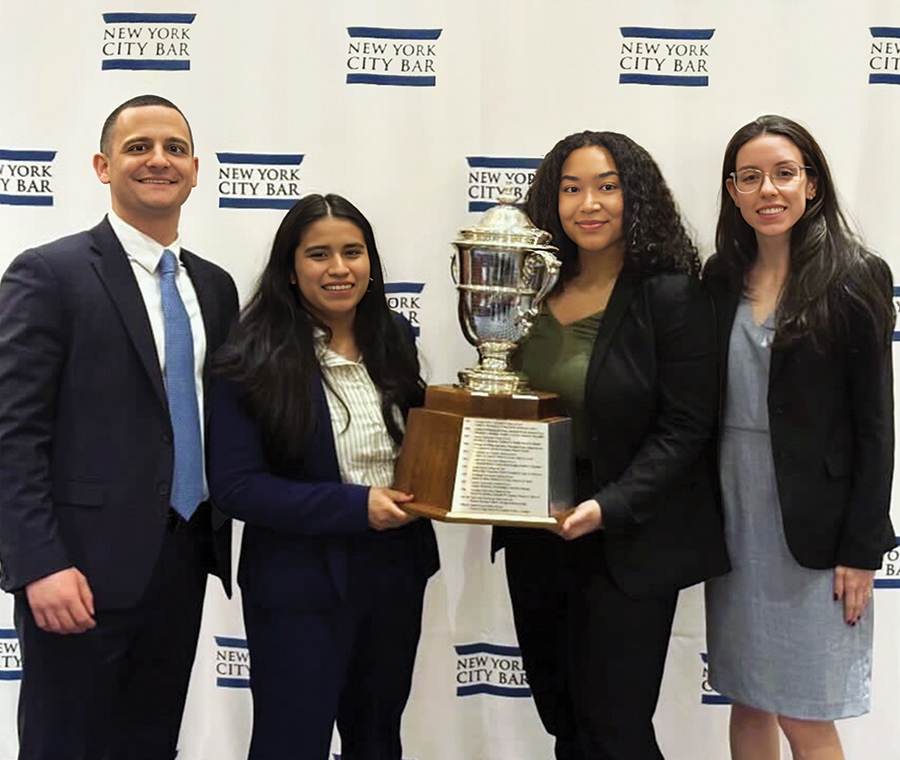
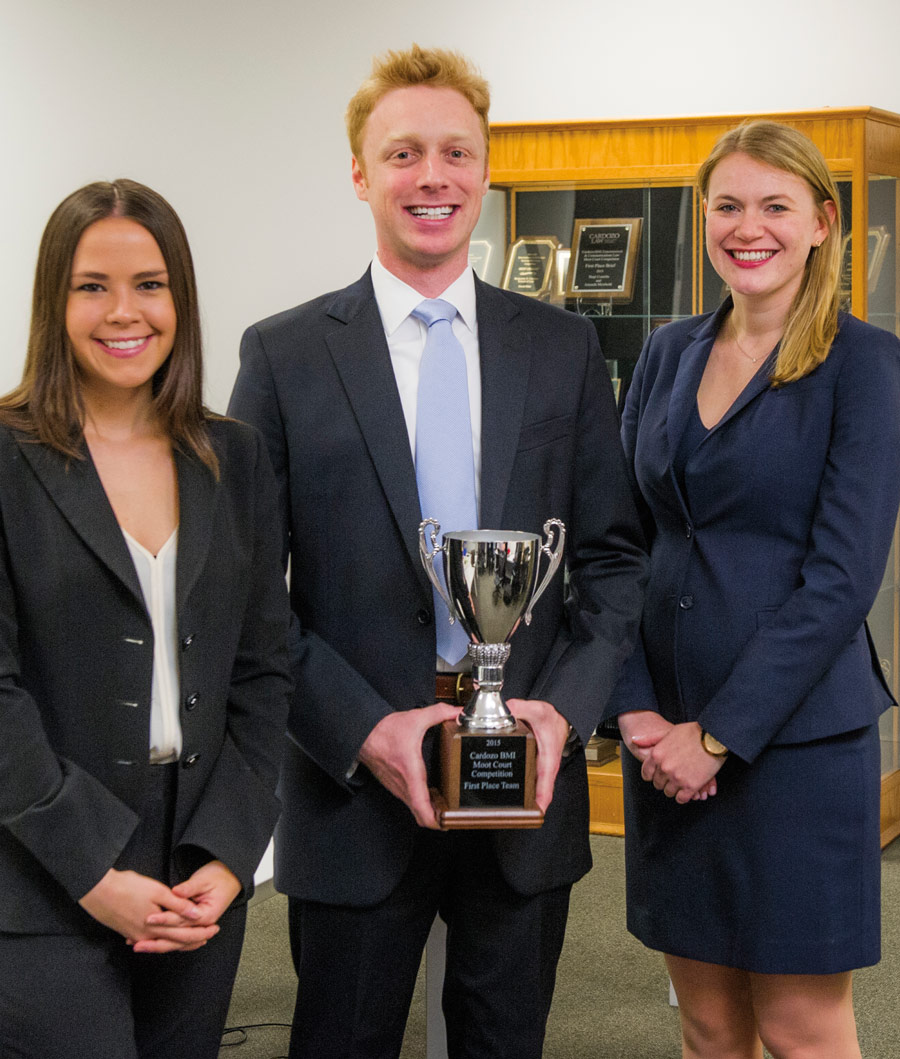
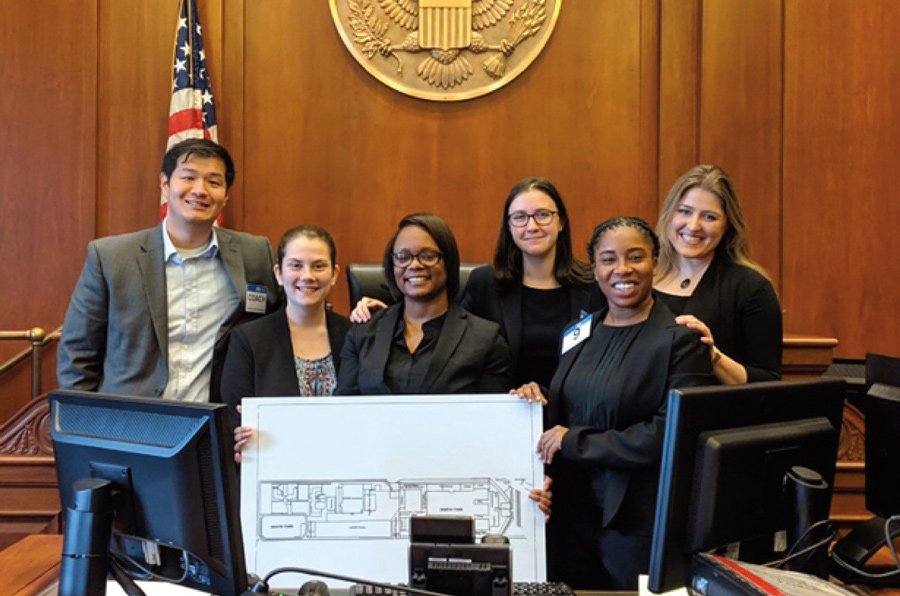
Our student teams routinely shine in regional, national, and international competitions. More important, students hone the practical, think-on-your-feet skills that lawyers need.

The Power of Advocacy
Fordham Law’s trial advocacy program is ranked #5 in the country, according to the 2025 edition of U.S. News & World Report’s annual law school rankings.

International Opportunities
A Global Network
Fordham Law’s international programs put students face-to-face with grassroots partners in the United States and across the globe to work on real-world human rights programs. Students engage with global companies, collaborate with governmental agencies, participate in extensive human rights initiatives, and learn from distinguished foreign professors through study abroad programs from Dublin to Shanghai. Along the way, they garner internships and externships with multinational corporations, law firms, courts, government offices, and human rights organizations.
By the Numbers

Specialty Areas
In its 2025 edition of America’s Best Graduate Schools, U.S. News & World Report ranked 11 Fordham Law programs among the top 30 in the country.
Living Out the Law

Make a Difference from Day One

Sponsored Summer Fellowships
In 2025, Fordham Law School awarded over $609,082 in public interest summer fellowships, making it possible for students to work for various government and nonprofit organizations.
Sponsored Summer Fellowships
In 2025, Fordham Law School awarded over $609,082 in public interest summer fellowships, making it possible for students to work for various government and nonprofit organizations.

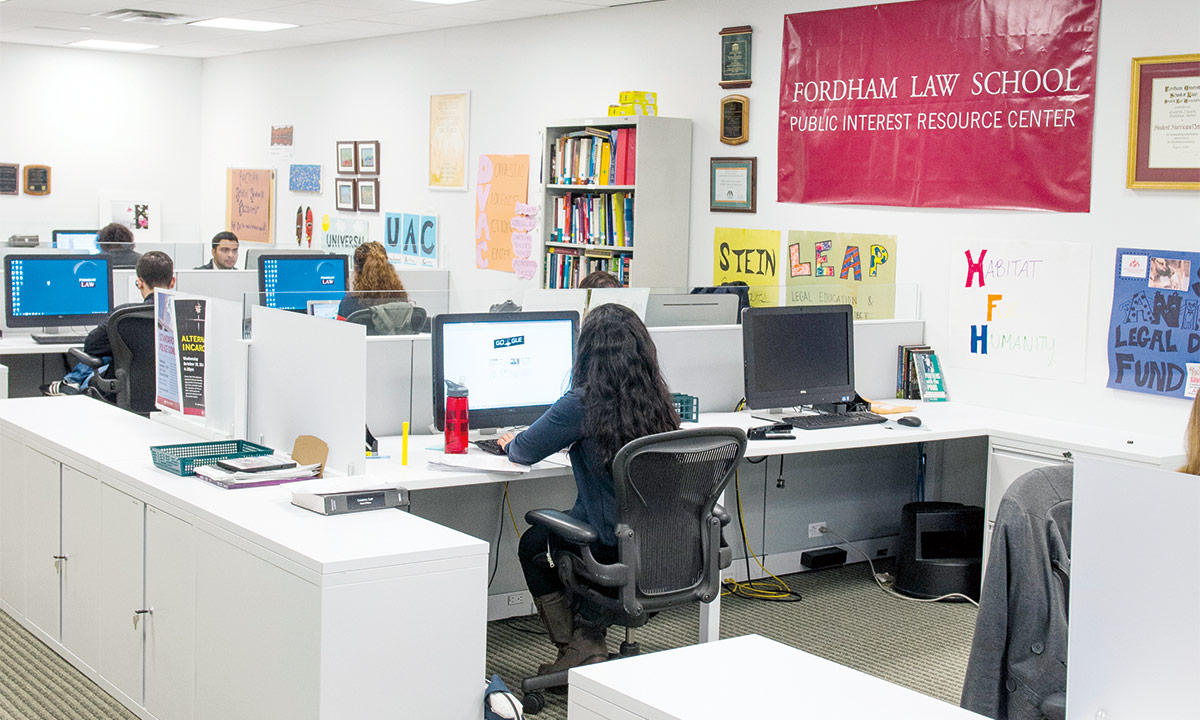
Public Interest Resource Center (PIRC)
With approximately 20 PIRC student organizations to choose from, you’ll be able to find a cause that sparks your passion, satisfies your interests, and hones your legal skills. The Class of 2025 participated in almost 116,917 hours of public service work during their time at Fordham. From your first week on, it’s possible to join—or form—a group and work for a cause that’s close to your heart.
PIRC Student Groups*
- Advocates for the Incarcerated
- Artist Representation Society
- Consumer Law Advocates
- Domestic Violence Action Center
- Education Law Collaborative
- Environmental Law Advocates
- Fordham Law Advocates for Voter Rights
- Fordham Law Defenders
- Fordham Law Student Veterans Association
- Fordham National Lawyers Guild
- Housing Advocacy Project
- If/When/How: Lawyering for Reproductive Justice
- Immigration Advocacy Project
- International Refugee Assistance Project
- Mentoring Youth Through Legal Education
- Stein Scholars
- Student Animal Legal Defense Fund
- Suspension Representation Project
- Unemployment Action Center
- Workers’ Rights Advocates
Stein Scholars Program
The nationally recognized program combines academic requirements—coursework focusing on public interest law and legal ethics—with experiential opportunities to help you develop and enhance your leadership, advocacy, and communication skills.
During your first summer as a Stein Scholar, you are guaranteed a stipend to work with a public interest organization, an opportunity that is available your second summer as well. During your upper-class years, you enroll in seminars that challenge you to think critically about the role of lawyers in society and you learn how to be a public interest lawyer by doing the work of a public interest lawyer through one of the law school clinics. Perhaps most important, you will join a community of diverse leaders who support each other throughout their careers as they pursue work as public defenders, community lawyers, human rights advocates, government lawyers, and grassroots activists.
Pro Bono Scholars
While you help others, you’ll also be helping yourself get a jump-start on your legal career, as the program allows you to take the New York Bar Exam early: in February of your final year of study. Once you pass, you’ll be admitted to practice right after graduation.
Centers, Institutes, and Programs
Brendan Moore Trial Advocacy Center
Offering students hands-on training, Fordham Law’s trial advocacy program is ranked 5th in the country in the 2025 U.S. News & World Report rankings. Teams of students participate in civil and criminal trial competitions at regional and national levels.
Center for Judicial Events & Clerkships
The CJEC’s mission is to find new and innovative ways to involve members of the judiciary in the life of Fordham Law and to build upon our successes by enhancing the existing clerkship support for our students and alumni.
Center of European Union Law
A teaching and resource center devoted to European law, the European Union, and international antitrust law, the center facilitates the exchange of ideas and information among foreign officials and scholars and their U.S. counterparts.
Center on Asian Americans and the Law
The Center is among the first in the country to focus on the intersection of the Asian American experience with legal studies. It functions as a hub and platform for interdisciplinary scholarship on issues of interest—not only to the Asian American and Pacific Islander community, but to all Americans.
Center on Law and Information Policy
The Center on Law and Information Policy makes significant contributions to the development of law and policy for the information economy and prepares the next generation of leaders to address the fast-changing issues at the intersection of law and technology.
Center on National Security
A nonpartisan law and policy think tank, the Center on National Security is dedicated to providing thought leaders, policy makers, and the public with the tools to better understand today’s national security issues.
Center on Race, Law and Justice
The Center on Race, Law and Justice generates innovative responses to racial inequality and discrimination by prioritizing interventions informed by law, data, and social science to create concrete changes in communities, institutions, and public policy.
Competition Law Institute
Now in its 52nd year, the Fordham Competition Law Institute provides internationally recognized programs on antitrust law, such as its annual International Antitrust Law and Policy Conference, widely recognized as one of the premier events in the field.
Corporate Law Center
The Fordham Corporate Law Center brings together scholars, professionals, policy makers, and students for the discussion and study of business and financial law.
Dispute Resolution Program
Offering unique opportunities for study in the field of alternative dispute resolution (ADR) through renowned clinics and courses taught by leading academics, the Dispute Resolution Program is ranked 12th in the country in the 2025 U.S. News & World Report rankings. The program balances theory and casework with a valuable practicum. Students also teach ADR and mediation skills in the NYC community.
Fashion Law Institute
The world’s first center dedicated to law and the business of fashion, the Institute offers training for the fashion lawyers and designers of the future.
Feerick Center for Social Justice
The Feerick Center addresses the problems faced by marginalized and low-income people, creating strategies that reform policies, educate the public, and help redress injustice.
Institute on Religion, Law and Lawyer’s Work
Through its courses, interfaith programs, panels, and mentorship, the Institute encourages open, positive, and constructive dialogue on issues relating to religion and law.
Intellectual Property Institute
The Intellectual Property Institute develops new IP initiatives and projects and holds the annual Intellectual Property Law and Policy Conference, known as “the Davos of IP,” to foster progress toward identifying and resolving issues of concern to the IP community.
Leitner Center for International Law and Justice
One of the oldest and largest law school–based human rights programs, the Leitner Center provides hands-on education and real-world training to law students and contributes to critical research among legal scholars in international human rights.
National Center for Access to Justice
The Center uses cutting-edge data analytics to support reforms that create a meaningful opportunity for all people to be heard and to secure their rights.
Neuroscience and Law Center
The Fordham Neuroscience and Law Center takes an evidence-based and multidisciplinary approach to examining the current and potential uses of neuroscience evidence in the legal system.
Public Interest Resource Center (PIRC)
The hub of public interest, PIRC offers programming and individualized career counseling for students drawn to public interest law. PIRC is the place where you can join and form student-run groups that channel passions, interests, and skills into pro bono, public service, and community service work.
Scott Simpson Cross-Border Institute
Fordham Law and Skadden, Arps, Slate, Meagher & Flom co-founded the Scott Simpson Cross-Border Institute in 2023. Conceptualized by the late Scott Simpson, global head of Skadden’s transactions practices, it unites leading law firms, practitioners, academics, and students around the world to assess cross-border trends, analyze issues, and drive innovation and best practices.
Stein Center for Law and Ethics
The Stein Center examines the important role that lawyers play in our society, explores the ways ethical values inform and improve the legal profession, and inculcates service to others into teaching law, improving the legal profession in the process.
Tanen Leadership Center
The Tanen Leadership Center cultivates students’ professional skills and offers leadership training so that they can become future leaders in law and business. The Center supports programming in the areas of professionalism, the House System, student affairs, legal writing, fundamental lawyering skills, career planning, and diversity initiatives.
Urban Law Center
Through the Urban Law Center, students participate in advancing the scholarship and interdisciplinary practice of the legal, governance, and regulatory aspects of urban law, helping to craft solutions to the crucial issues facing cities today.
Student Services and Organizations
During your first year of law school, your schedule will contain special blocks of time for programming around career development; professionalism; diversity, equity, and inclusion; and well-being. In our legal skills workshops, for instance, you will learn to read and brief cases, manage your responsibilities and time efficiently, and effectively take law school exams. In addition, all first-years are assigned an upper-level mentor from the Board of Student Advisors who will provide guidance and assist with your transition to being an attorney-in-training. The Office of Student Affairs also provides personal counseling.
If you are a law student with a documented disability, the office will provide support and reasonable accommodations. Additionally, during your upper-division years, we offer several programs designed to ensure that you pass the bar exam on your first attempt.
To foster the importance of the law school–life balance, the Office of Student Affairs works closely with student organizations and offers regular programming and social gatherings for the law school community.
Fordham Law Student Organizations*
- Advocates for the Incarcerated
- Advocates for Trans* Law Students
- American Constitution Society for Law and Policy
- Artist Representation Society
- Asian Pacific American Law Students Association
- Black Law Students Association
- Brendan Moore Trial Advocacy
- Consumer Law Advocates
- Disabled and Allied Law Student Association
- Dispute Resolution Society
- Domestic Violence Action Center
- Entrepreneur Law Society
- Environmental Law Advocates
- Fashion Law Society
- Fordham Art Law Society
- Fordham Blockchain Law Society
- Fordham Business and Law Association
- Fordham Cannabis Law Association
- Fordham Christian Fellowship
- Fordham Environmental Law Review
- Fordham Evening Division Society
- Fordham Federalist Society for Law and Public Policy Studies
- Fordham First Generation Students
- Fordham Follies
- Fordham Information Law Society
- Fordham Intellectual Property Law Society
- Fordham Intellectual Property, Media and Entertainment Law Journal
- Fordham International Law Association
- Fordham International Law Journal
- Fordham Journal of Corporate and Financial Law
- Fordham Labor and Employment Law Society
- Fordham Law Advocates for Voter Rights
- Fordham Law Basketball
- Fordham Law Defenders
- Fordham Law Moot Court
- Fordham Law Real Estate Society
- Fordham Law Review
- Fordham Law Soccer Club
- Fordham Law Softball
- Fordham Law Sports Forum
- Fordham Law Student Veterans Association
- Fordham Law Women
- Fordham National Lawyers Guild
- Fordham Non-Traditional Law Student Association
- Fordham Urban Law Journal
- Fordham Voting Rights and Democracy Project
- Fordham Womxn of Color Collective
- Hellenic Law Students Association
- Housing Advocacy Project
- If/When/How Lawyering for Reproductive Justice
- Immigration Advocacy Project
- International Refugee Assistance Project
- Irish Law Students Association
- Italian-American Law Students Association
- Jewish Law Students Association
- Latin American Law Students Association
- Legal Mandarin Society
- Media and Entertainment Law Society
- Mentoring Youth Through Legal Education
- Middle Eastern and North African Law Students Association
- Muslim Law Students Association
- OUTLaws
- People’s Parity Project
- Public Interest Resource Center
- Society for Renewable and Green Energy
- South Asian Law Students Association
- Stein Scholars
- Student Animal Legal Defense Fund of Fordham Law School
- Student Bar Association
- Suspension Representation Project
- Tax Law Society
- Unemployment Action Center
Center for Judicial Events & Clerkships
- Judicial Engagement: finding new and innovative ways to engage members of the judiciary in the life of our Law School
- Clerkships: building upon our clerkship successes by enhancing the existing clerkship support for our students and alumni
Throughout the academic year, the CJEC partners with other centers, faculty, and student organizations to host events with judges. These engagements enable students to gain firsthand exposure to federal and state court judges and the judicial process in both formal and informal settings.
Distinguished Jurist in Residence Lecture: Our Jurist in Residence Program brings prominent judges from across the country to the Law School to interact with our Law School community and share their expertise. During the course of their visit, judges engage in all aspects of Law School life, from co-teaching courses to hosting roundtable discussions with students and meeting informally with faculty. The Jurist’s visit culminates with a lecture to the entire Law School community —faculty, students and alumni—on a timely and important legal topic.
Judicial Day in Residence: Our Judicial Day in Residence Program welcomes multiple judges from a single local court to the Law School for a day in residence. The visiting jurists co-teach courses, attend an informal lunch with students, and actively participate in a town hall we host discussing the court’s work followed by a reception with the Law School community.
First to the Bench: Each year, we welcome a prominent member of the judiciary to the Law School who is either the first in their family to attend college or professional school or immigrated to this country. This “first generation” judge then discusses their path to the bench in a session aimed at our self-identified first-generation students and alumni. At the conclusion of the Fireside Chat, we host a reception welcoming back our alumni clerks who are first-generation to meet and mingle with our current students to forge relationships.
View from Chambers: The series is designed to shine a spotlight on a diverse slate of judges from a range of courts at the federal and state levels. At each View from Chambers, the participating judge(s) provide unique insights into the work of their courts (such as duties and powers), emerging topics of interest, and the role of judges and clerks in those courts, as well as the path to becoming a judge in that court.


Clerkship Program: Law from Behind the Bench
Clerkships, typically one or two years in duration, enable graduates to work alongside a federal or state court judge, or as part of a pool of clerks supporting the work of a particular court. The experience offers an unparalleled opportunity to observe and engage with the inner workings of the judicial process, while also honing legal research and writing skills under the supervision of a future lifelong mentor—the judge.
The CJEC, working collaboratively with the Faculty Clerkship Committee, provides students and alumni with a comprehensive support structure—including strategic counseling, feedback and guidance on application materials, proprietary clerkship resources and guides, programs and workshops, and interview preparation—to help our clerkship applicants stand out.

Clerkship Outcomes
Members of the J.D. Class of 2025 have secured 36 clerkships at the federal and state court levels, including 3 on federal circuit courts of appeals. Over the course of the 2025–2026 term, we will have more than 90 of our alumni serving as clerks in the federal and state courts at varying levels. In the coming term and over the past five years, our clerks spanned the nation, serving on the federal circuit courts for the 2nd, 3rd, 4th, 5th, 10th, and 11th; federal district courts in Alaska, Arizona, California, Connecticut, Delaware, Florida, Guam, Georgia, Illinois, Massachusetts, Michigan, Minnesota, Mississippi, New Jersey, New Mexico, New York, Oklahoma, Oregon, South Carolina, Tennessee, Texas, and Virginia; U.S. Bankruptcy Courts, U.S. Court of International Trade, U.S. Court of Federal Claims, U.S. Immigration Court, U.S. Patent and Trademark Board, U.S. Tax Court; and on state courts in Alaska, Connecticut, Delaware, Florida, Hawaii, Maine, Maryland, Massachusetts, Minnesota, New Jersey, New York, North Carolina, Pennsylvania, Texas, and Washington.
Who We
Know Is
Who You’ll
Know

Fordham Family
From Academics to Activists and Everything in Between
Get the Career
You Want:
The Network
Effect

Your Career Starts Here
Your Fordham Law degree is your gateway. To an exciting career. To a life of service. To melding your personal aspirations with your professional interests so you can shape the legal career that’s right for you. Our coordinated career support centers can help you define your professional path, develop faculty connections, and tap into Fordham Law’s alumni network.
Whether you want to lead in the law, business, politics, finance, government, public interest, academia, or another field, your Fordham Law education will help you get there, every step of the way.
Career Planning
Career planning should be about more than finding a job. It should be about making a choice that inspires you.
Career Planning Center (CPC) counselors will work with you and provide the advice, support, resources, guidance, and tools you need to help:
- Determine your career path
- Explore opportunities
- Connect with employers
- Showcase your best professional self in the job search
During your first year at Fordham, you will have blocks of time integrated into your schedule devoted to programming around career development and professionalism.
All students will benefit from the CPC’s Professional Development Handbook, which will guide you in its integrated approach to career development while you’re in law school and beyond. CPC also assists in career exploration and offers skills-based programming, small-group summer legal job search strategy sessions, a mock interview program, and more.

Public Interest Career Support
The PIRC-sponsored student groups, the Leitner Center for International Law and Justice, the Center on Race, Law and Justice, the Access to Justice Initiative, and the Feerick Center for Social Justice represent just a few of the entry points for Fordham Law students who want to make a difference.

Public Interest Fellowships
Year after year, Fordham Law students receive prestigious fellowships that give them crucial experience at the beginning of their careers in public interest law. Below is a selection of the many post-graduate fellowships our students have received:
Defender Services Non-Capital Diversity Fellowship
Municipal Art Society of New York’s 2024–2026 Ralph C. Menapace Fellow
Immigrant Justice Corps
The Carey Gabay Fellowship, NYS Executive Chambers
Skadden Foundation Fellowship
E. Barrett Prettyman/Stuart Stiller Fellow
Civil Rights Fellow, National Education Association
Equal Justice Works
Justice Catalyst
Public Rights Project Fellowship, Boulder County DA’s Office
Year after year, Fordham Law students receive prestigious fellowships that give them crucial experience at the beginning of their careers in public interest law. Below is a selection of the many post-graduate fellowships our students have received:
New York State Excelsior Service Fellowship
Defender Services Non-Capital Diversity Fellowship
Municipal Art Society of New York’s 2024–2026 Ralph C. Menapace Fellow
Immigrant Justice Corps
The Carey Gabay Fellowship, NYS Executive Chambers
Skadden Foundation Fellowship
Department of Justice (DOJ) Honors Program
E. Barrett Prettyman/Stuart Stiller Fellow
Civil Rights Fellow, National Education Association
Equal Justice Works
Justice Catalyst
Public Rights Project Fellowship, Boulder County DA’s Office
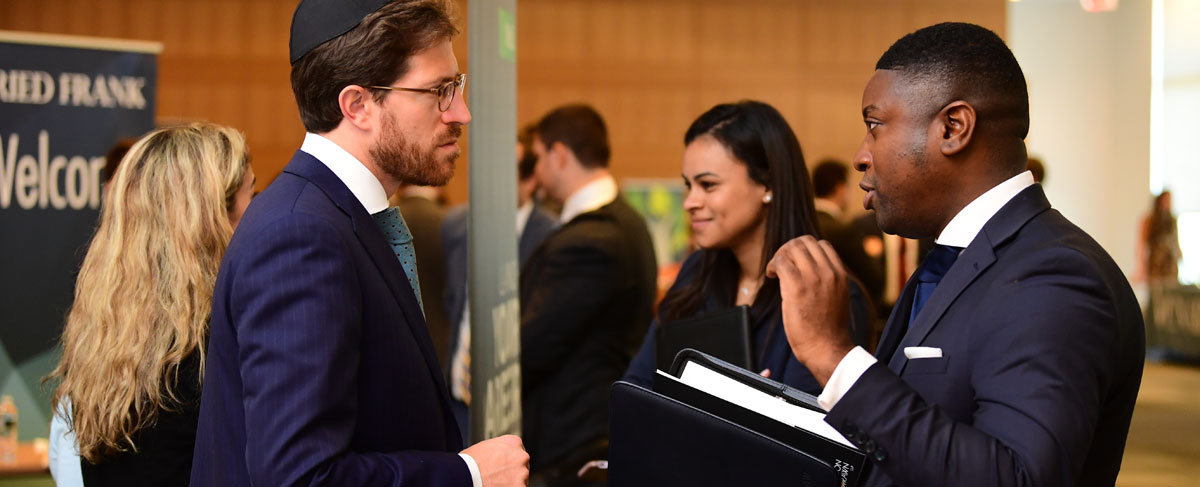
Recruiting and Networking
Formal Recruiting Programs
Each year, a wide variety of legal employers participate in our formal recruiting programs to recruit Fordham Law students—large law firms like Cravath, Jones Day, Ropes & Gray, Quinn Emanuel, and Paul Weiss; smaller or boutique law firms like Pryor Cashman and Selendy Gay; in-house legal departments at organizations like Memorial Sloan Kettering Cancer Center, and Eldridge Industries; government agencies, including local district attorneys’ offices; and public interest organizations like Brooklyn Defenders and New York Lawyers for the Public Interest. Other employers—such as Kirkland & Ellis and Latham & Watkins—recruit our students outside of our formal programs. Visit law.fordham.edu/employmentstats for more information.
Public Interest Career Fairs
If you are interested in a career in public service or public interest work, the Public Interest Resource Center (PIRC) coordinates Fordham Law’s participation in two of the largest public service career fairs in the country: the Equal Justice Works Career Fair in Washington, D.C., and the Public Interest Legal Career Fair in New York City.
Employer Receptions
Early in each spring semester, the CPC hosts a pair of receptions to introduce first-year students to over 60 employers that recruit our students for summer associate positions during their 2L summer. In this relaxed setting, you will be able to meet and connect with attorneys and recruiting personnel—many of whom are Fordham Law alumni.
Public Interest Networking Reception
Coordinated by PIRC and co-sponsored by 20 law schools, the Public Interest Networking Reception will introduce you to the outstanding and rewarding work done in public service with nonprofits, government agencies, and private/public interest law firms. Past participants (over 100) have included the ACLU, Legal Services NYC, and the Legal Aid Society.
Online Job Bank
While you are a student, access to our online Job Bank allows you to search for and apply to listings for internships while in law school and for full-time employment after graduation. The Job Bank, which the CPC is always working to expand, includes listings from law firms of all sizes, government agencies, corporate legal departments, public interest organizations, and even courts. Your access continues after graduation, as many employers use our Job Bank to seek experienced attorneys.
Alumni Network
Our alumni advance Fordham Law’s mission and reputation by engaging and collaborating with fellow alumni, students, and the wider Fordham Law community. Alumni resources and initiatives include:

Fordham Law Alumni Association (FLAA)
The FLAA, one of the largest law school alumni associations in the country, engages students within the Fordham Law alumni network from day one. As a student, you automatically become a member of the FLAA and have access to its benefits.
FLAA Mentorship
The FLAA and Fordham Law’s mentorship and advising initiatives pair you with a diverse group of alumni of differing seniority levels, backgrounds, and experiences, in a variety of legal careers—all of whom are available to help you do everything from mastering your introduction to law school to acing interviews and getting an offer. Our 1L House Mentors program connects students with alumni mentors throughout their first year, and the Mentor Minute program provides an opportunity for you to meet with an alumni mentor in short-term settings.
Worldwide Alumni Chapters
Fordham Law alumni can be found in 50 U.S. states as well as 96 countries worldwide. The FLAA currently has 38 national and international chapters, connecting you with Fordham Law alumni around the globe.
Networking Affinity Groups
The FLAA has formed a series of 12 active affinity groups that provide forums for alumni to gather socially and network, including:
- Alumni Attorneys of Color
- Alumni in Real Estate
- Business and Financial Law
- Compliance
- Entrepreneurial Law
- Fordham Law School Jewish Alumni
- Intellectual Property and Information Law
- International Law
- LGBTQ
- Litigation and Dispute Resolution
- Solo/Small Firm
- Women’s Networking – D.C. and NYC Chapters
FLAA Recent Graduate Committee
Members are leaders in our alumni community who graduated within the past 10 years. They dedicate their time and talents to strengthening the mission of Fordham Law, hosting social events, service projects, and quarterly meetings.
Small to Midsize Firm Leaders’ Advisory Council
This council, consisting of alumni in leadership roles at small to midsize firms, offers expertise and guidance to students choosing careers in small to midsize firm settings.
Public Interest Advisory Council
This council offers advice on how best to prepare for legal practice in public interest and public service positions, including legal knowledge, professional skills, and the ethos of service.
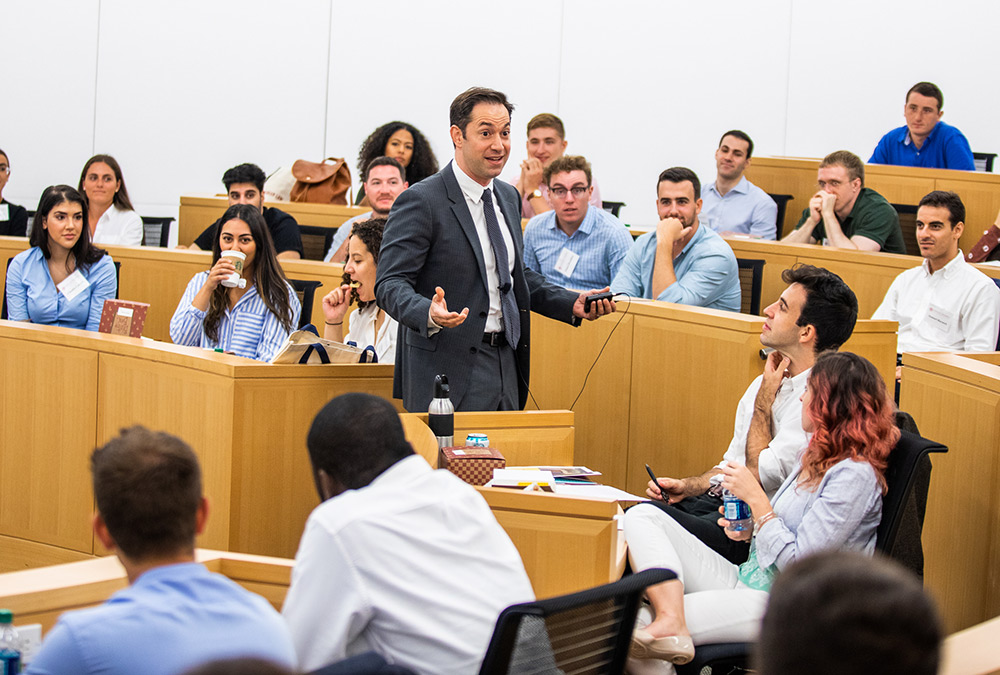
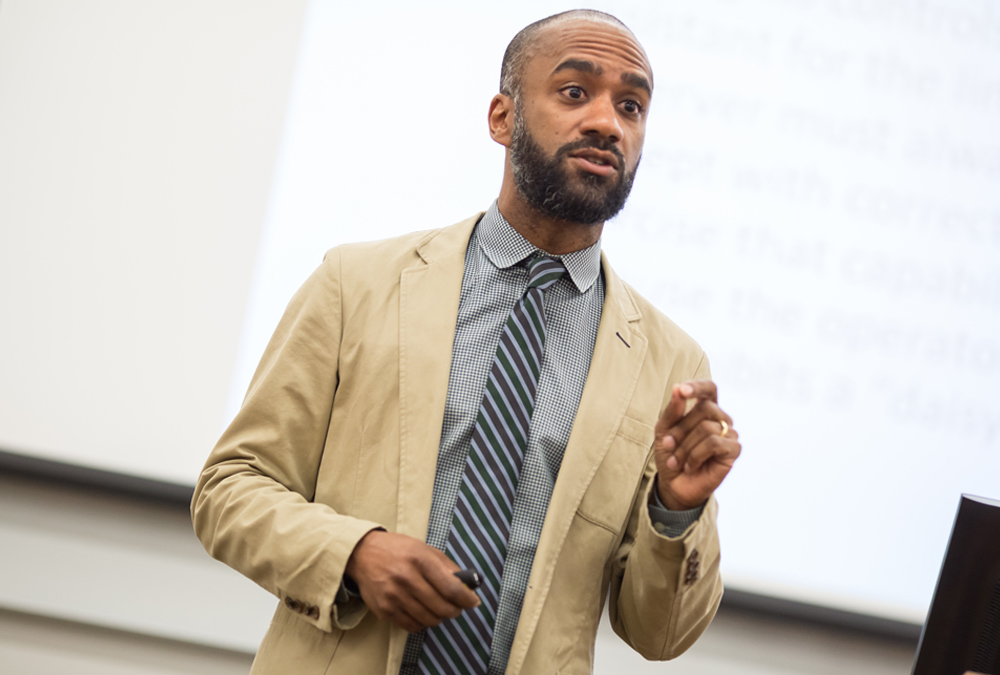
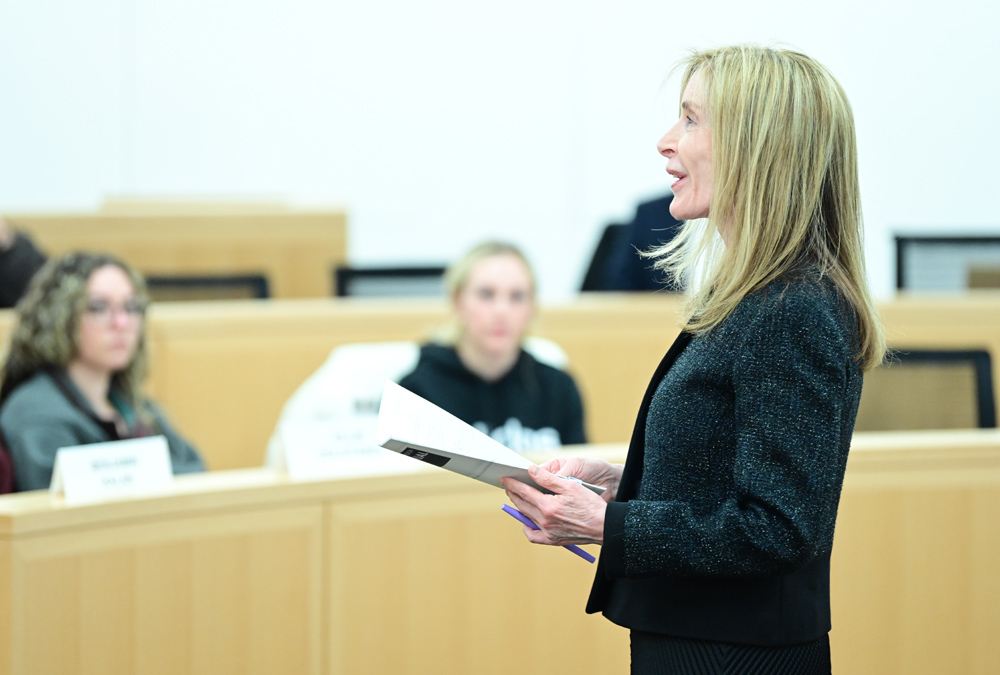
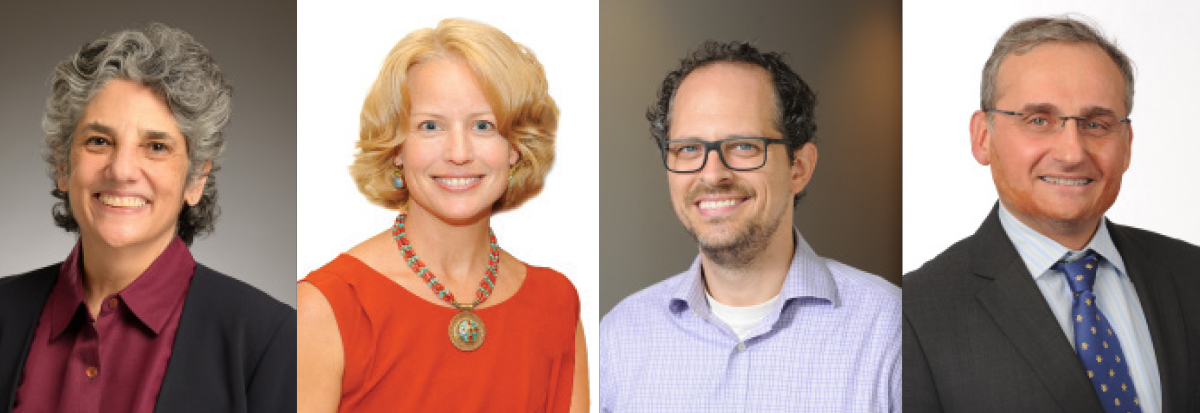
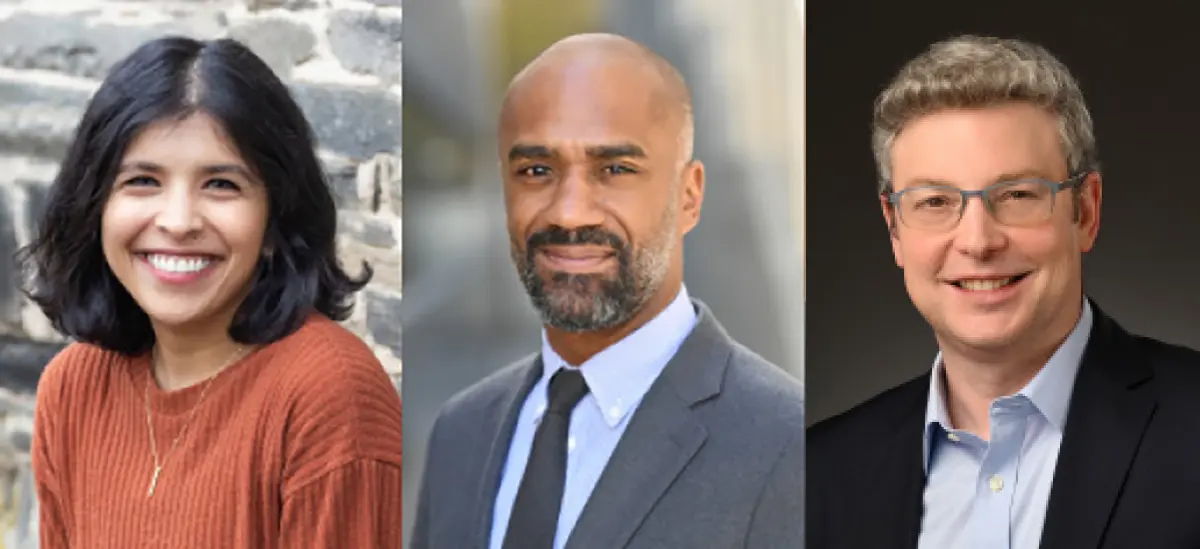
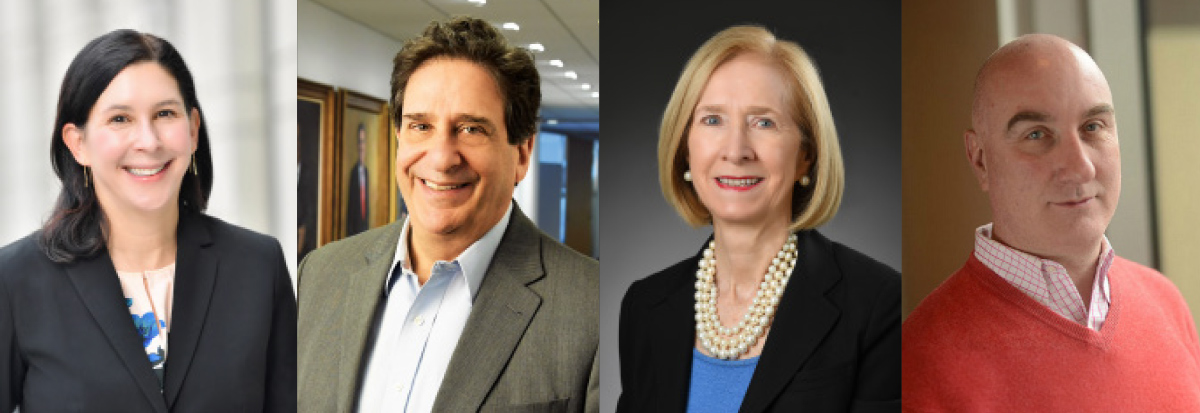
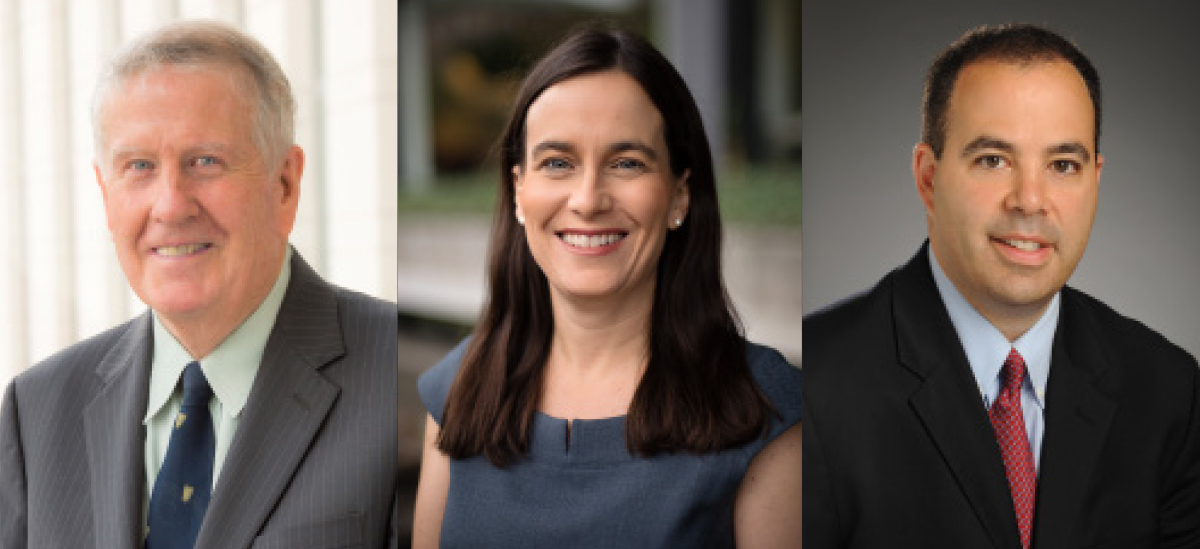
Faculty and Scholarship


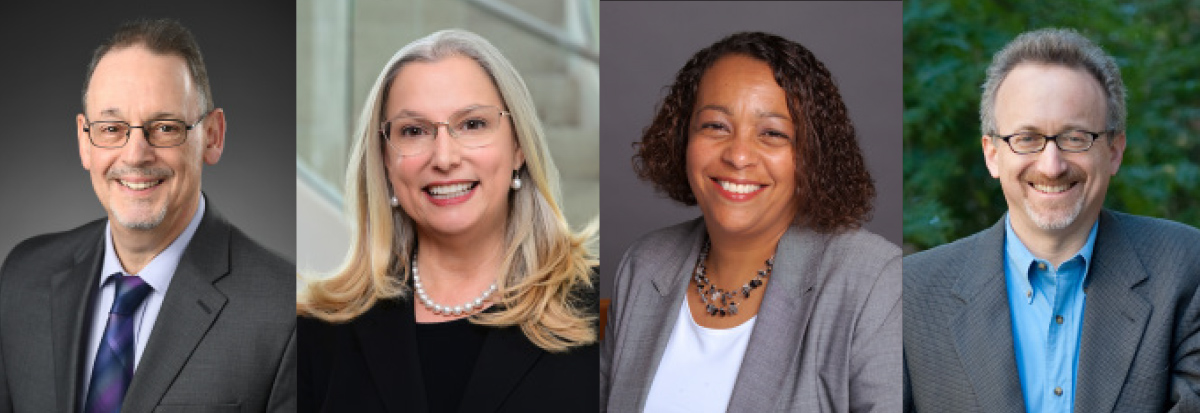

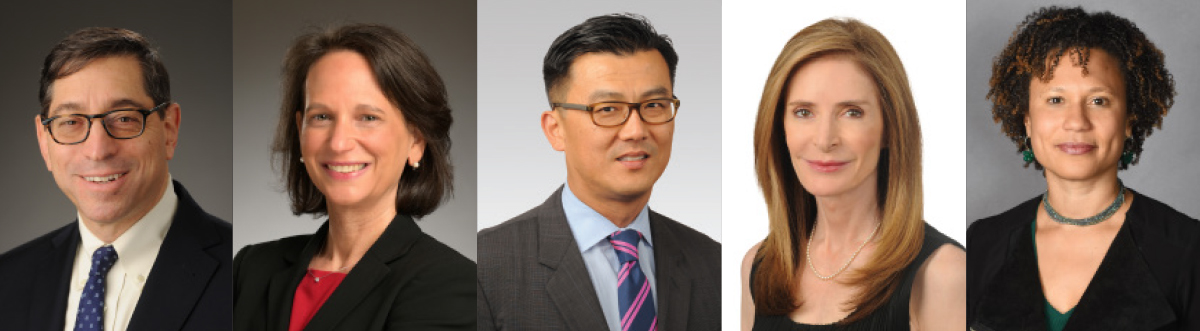
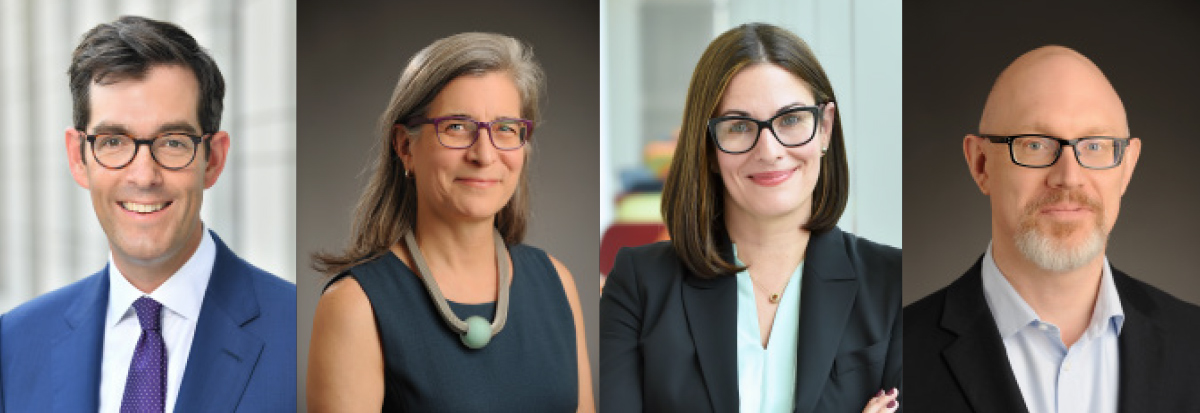

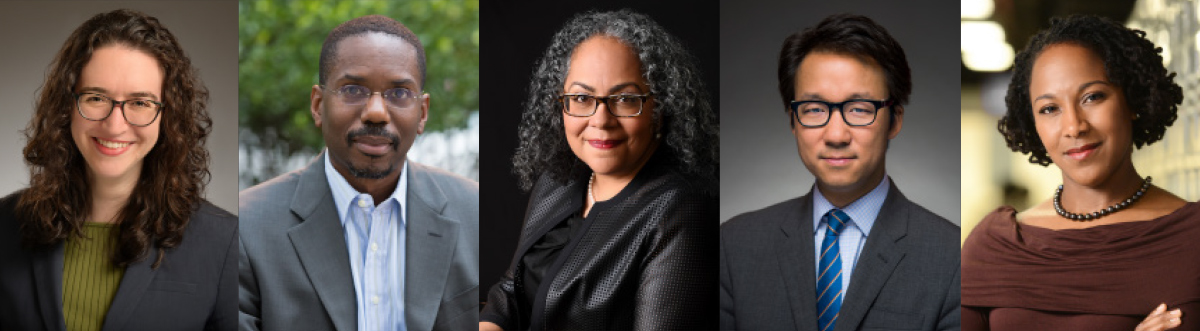



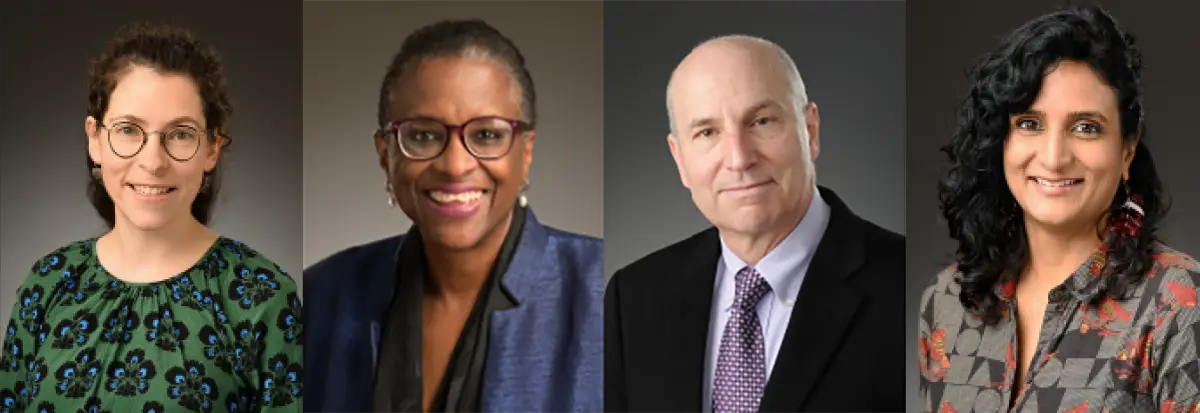
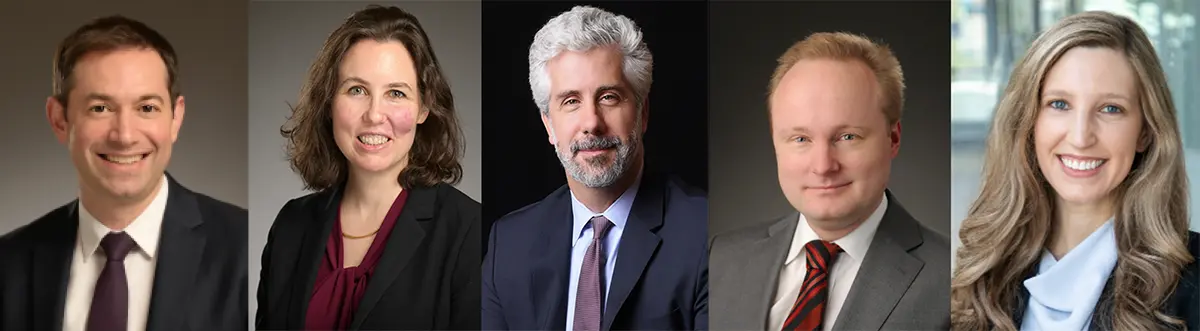
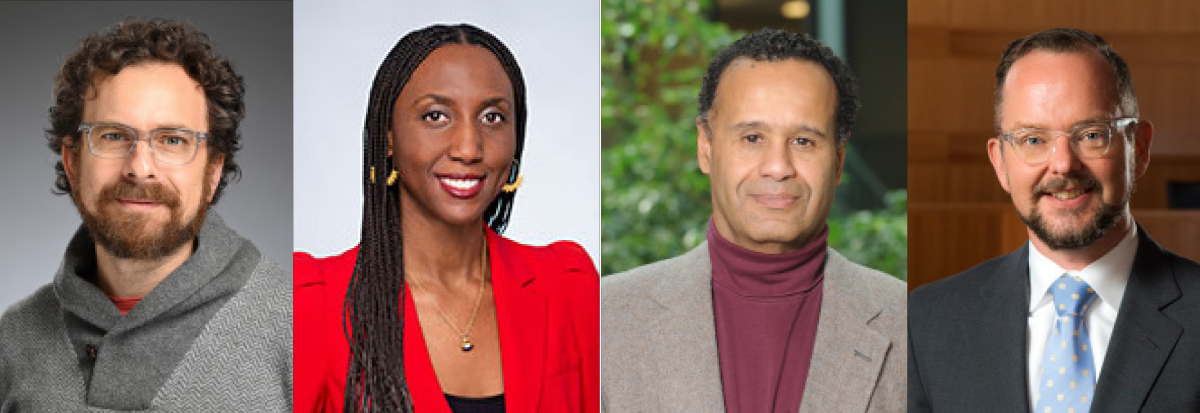
Explore our faculty directory,






Frequently Asked Questions
How do I apply?
We strongly encourage you to use the Law School Admission Council (LSAC) service and apply electronically at lsac.org. You can request a paper application by contacting us via email (lawadmissions@fordham.edu) or by calling our office (212-636-6810).
When are applications accepted?
Our application opens on September 15 and closes on March 15. Please note that admissions are rolling and we review applications as they are completed.
How much is the application fee?
The application processing fee is $75.
Can I receive an application fee waiver?
Need-based fee waivers are granted on a case-by-case basis. More information and the fee waiver application can be found at law.fordham.edu/apply.
When can I expect to be notified about my application?
Fordham makes decisions on a rolling basis. The committee endeavors to notify applicants of decisions within 12 weeks after the completion of their application. Applications received on or around University calendar breaks will take additional processing time.
What are the median LSAT and GPA for admitted students?
Our 2024 entering full-time students had a median LSAT of 167 and a GPA of 3.77. Our 2024 part-time students had a median LSAT of 165 and a GPA of 3.60.
What are my chances of being admitted?
While we can’t predict your chances of being admitted, please be aware that we take a holistic approach to the admissions process and consider all aspects of an application. More information can be found at law.fordham.edu/selectioncriteria.
Contact Information
J.D. Admissions
4th Floor
212-636-6810
lawadmissions@fordham.edu
LL.M. Admissions
8th Floor
212-636-6883
llm@fordham.edu
M.S.L. Admissions
8th Floor
212-636-6883
msl@fordham.edu
Financial Aid
4th Floor
212-636-6815
lawfinaid@fordham.edu
Registrar
4th Floor
212-636-6800
registrar@fordham.edu
Student Affairs
4th Floor
212-636-7155
lawstudentaffairs@fordham.edu
Career Planning
Lower Level
212-636-6926
careers@law.fordham.edu
Alumni Relations
8th Floor
212-636-6806
lawalumni@fordham.edu
Clinical Legal Education
9th Floor
212-636-6934
clinicdesk@fordham.edu
Information Systems and Planning
Lower Level
212-636-6786
lawhelpdesk@fordham.edu
Public Interest Resource Center
Lower Level
212-636-6952
pirc@fordham.edu
International Programs and Study Abroad
8th Floor
212-636-7702
lawstudyabroad@fordham.edu
